Classic Central Tibet Pilgrimage
Your pilgrimage begins in Chengdu with a two-hour flight to Middle Kongpo in southeastern Tibet, arriving at a comfortable elevation of just under 10,000 feet. Kongpo is celebrated for its breathtaking natural beauty, lush forests, and diverse landscapes. Thinley Norbu Rinpoche called Kongpo “Forest Valley Land,” and Westerners have often likened it to the “Switzerland of Tibet.”
Buchu Tergyi Lhakhang is a geomantic temple built in the 7th century by Songtsen Gampo on the right elbow of the ogress. It forms part of a network of geomantic temples surrounding the Jokhang in Lhasa. Yeshe Tsogyal concealed 150 treasures here, and His Holiness Dudjom Rinpoche later restored Buchu. The name Buchu appears in the colophons of his writings. It is an auspicious way to begin pilgrimage by stepping into the far past.
Mount Namchak Barwa (7,756 meters), the highest peak in the eastern Himalayas, rises like a ritual dagger or phurba/kilaya. Its snow-capped summit earned it the name Blazing Meteorite. The mountain is a repository of hidden treasures, or terma, some discovered by Sangye Lingpa in the 14th century and others by Duddul Dorje in the 17th century.
Dudjom Lamaling, Sanctuary of the Master, was established by Dudjom Rinpoche, Jigdral Yeshe Dorje, in the 1930s at a significant geomantic location in Kongpo. Over time, he founded five nearby centers, creating a complex of temples, stupas, residences, retreat centers, and gardens. The Zangdok Palri Temple, prominently situated on the slopes of Norbu Ri, was rebuilt after earthquakes in the 1940s and 1960s. Following Rinpoche’s passing in 1987, his eldest daughter, Semo Dechen Yudron, and later her husband, Lama Chonyi, continued the restoration work.
Leaving Kongpo for Lhasa, you will make a short visit to Katsel, another 7th-century district-controlling temple located on the ogress’s right shoulder. Though reconstructed, its profound energy remains palpable. You’ll arrive in Lhasa by late afternoon or early evening, with time to explore the Barkhor or enjoy a cappuccino.
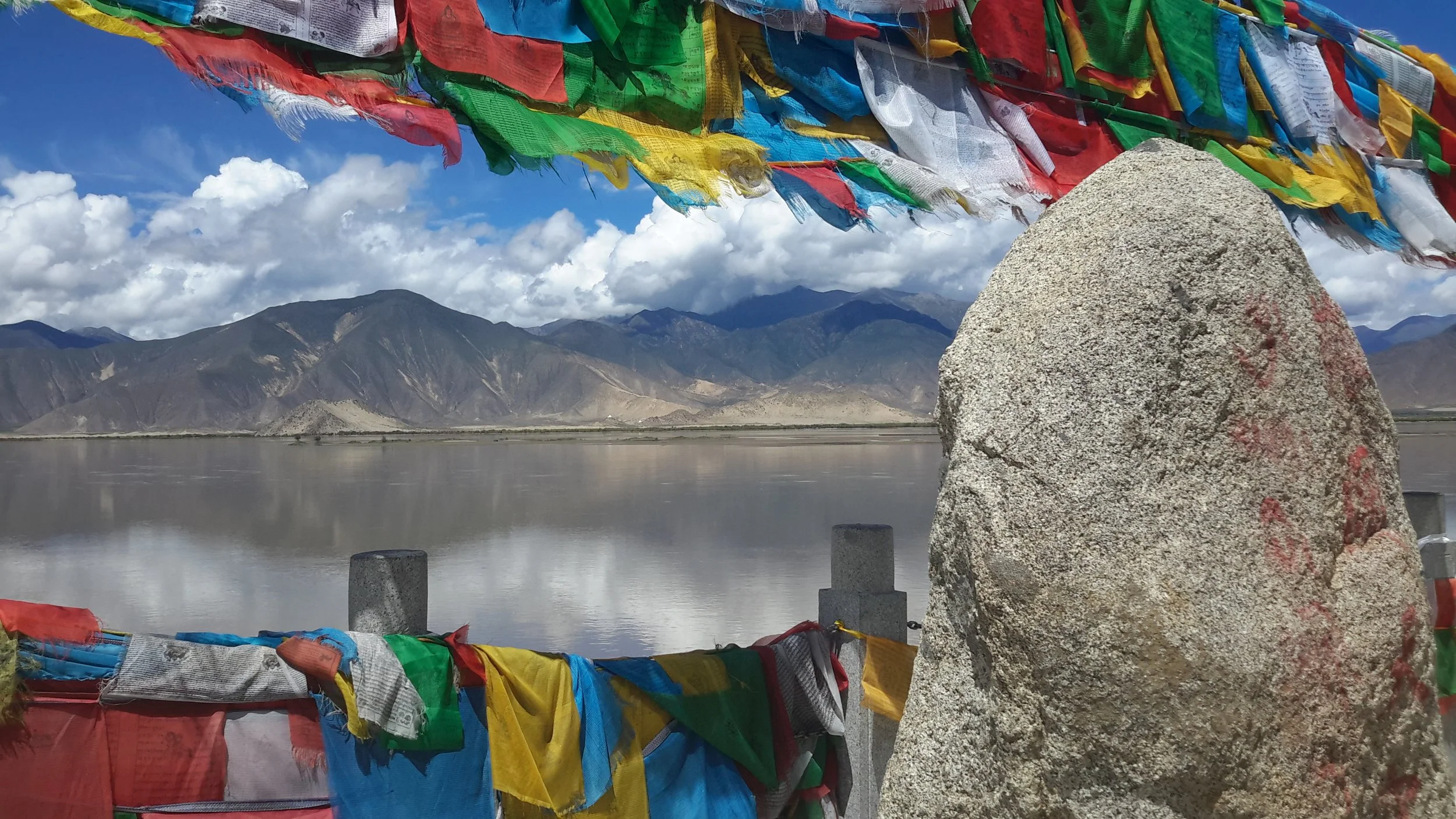
At Drak Yerpa, the Caves of Mystical Realization, you’ll visit caves associated with Guru Rinpoche, Yeshe Tsogyal, Songtsen Gampo, the 80 Siddhas of Yerpa, and Atisha. The landscape is awesomely scenic, alive with the winds of strong blessings and prayer flags galore.
Lhasa, the abode of the gods, offers a range of accommodation options. Your three-day stay includes visits to the Potala Palace, Lukhang Temple, Jokhang Temple, Ramoche Temple, the Barkhor, and Norbulingka. You can also join the traditional morning circumambulation, the Lingkhor, which circles the Potala. The Potala and Jokhang, both UNESCO World Heritage Sites, stand at the heart of Tibetan Buddhism. Lukhang, located on an island behind the Potala, contains unique murals but is often closed; however, the surrounding park and gardens offer a peaceful retreat. The Jokhang, Tibet’s holiest temple, houses the revered Jowo Shakyamuni statue. A short walk through the Barkhor brings you to Ramoche, built by Princess Wencheng. It is at her burial site that she divined a direct connection with the crystal palace of the water-dwelling spirits. While in Lhasa, you may explore independently and choose the group activities that most interest you.
After Lhasa, travel to Samye on a scenic 45-minute drive through the mountains. After checking into your hotel, you may circumambulate Samye and/or catch the sunset from Hepori Hill, a powerful geomantic site where Guru Rinpoche subdued hostile spirits. The view of Samye and the Yarlung Valley from the hilltop is stunning.
Samye, Tibet’s first Buddhist monastery, was founded in the 8th century. Its architecture reflects Mahayana cosmology, with the central temple (Utse) and surrounding structures representing Mount Meru and the four continents. Though rebuilt several times, the complex retains its original essence. Once a major religious and political center, Samye remains a vital pilgrimage destination, with its tiered main temple, satellite temples, colorful stupas, and encircling walls creating an atmosphere of timeless devotion.
From Samye, a 35-minute drive west along the Tsangpo River leads to Tsogyal Latso, the birthplace of Khandro Yeshe Tsogyal. Located in the Drakda Valley, legendary abode of Vajra Varahi and Saraswati, her birthplace features the life-force lake, or latso, that emerged at her birth. Nearby are a spring believed to flow with her miraculous breast milk, her life-force tree, and a stupa marking her birthplace. The nuns will warmly welcome you with joy.
The next day, about an hour from Tsogyal Latso, is Drak Yangdzong, where Guru Rinpoche spent three years and, together with Yeshe Tsogyal, concealed Vajrakilaya treasure texts. A pleasant uphill trail leads to the caves, where caretaker nuns will greet you. The three principal caves, considered Guru Rinpoche’s Body, are reached by rope ladder and a short crawl through a tunnel.
Behind Samye, the Chimphu Mountain Hermitage is Guru Rinpoche’s Speech. It remains an active retreat area for monks, nuns, and lay practitioners from across Tibet and China. Its geography carries outer, inner, and secret meaning. You’ll enjoy a gentle hike to sites such as King Trisong Detsen’s Copper-Coloured Mountain cave hermitage, Yeshe Tsogyal’s southern cave hermitage, Jigme Lingpa’s Flower Cave, and Longchenpa’s gilded reliquary stupa. At the summit is Drakmar Keutsang, where Guru Rinpoche bestowed the Eight Canons of Accomplishment empowerment upon his eight main disciples. There is also a stone impression where Princess Pemasel lay when Guru Rinpoche revived her.
Heading north from Samye through the Drakmar Valley, we may visit Drakmar Drinzang, birthplace of King Trisong Detsen, before continuing to Yemalung. Important highlights here include a sacred spring that emerged when Padmasambhava conferred a long-life empowerment upon King Trisong Detsen, the caves of Padmasambhava and Vairotsana, and the Guru temple and assembly hall adjacent to the main temple. The day concludes by crossing to the south side of the Tsangpo River and arriving in the small city of Tsetang.
On the final day, enjoy a restful drive through Chongye to the Valley of the Kings, where the burial mounds of imperial kings, including Songtsen Gampo and Trisong Detsen, are located. The final pilgrimage site is Tsering Jong, where Jigme Lingpa spent his later years. This accessible temple and small nunnery, rich with relics, provide a fitting and joyful conclusion to the journey.